
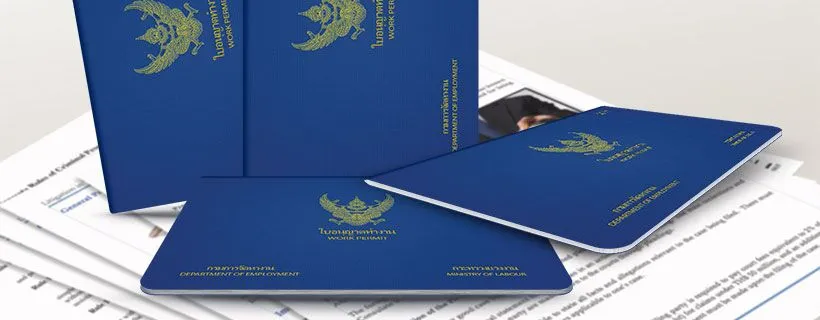
A Thai work permit is a core legal requirement for any foreign national who wishes to work, operate a business, or perform professional activities in Thailand. Thai authorities strictly regulate foreign employment, and violations—intentional or not—can lead to heavy fines, deportation, and long-term immigration consequences. Because the definition of “work” under Thai law is broad, many foreigners unknowingly breach regulations by engaging in activities they assume are permitted under a visa alone.
This article provides an in-depth and practical explanation of Thai work permits, covering the legal framework, eligibility requirements, application procedures, employer obligations, restricted occupations, special work permit categories, penalties, and compliance strategies.
1. Legal framework governing Thai work permits
Thai work permits are primarily regulated under the Emergency Decree on the Management of Foreign Workers B.E. 2560 (2017) and its subsequent amendments. Enforcement is handled by the Department of Employment (DOE) under the Ministry of Labor.
Under Thai law:
-
A foreigner may not work in Thailand without a valid work permit
-
Holding a visa does not automatically grant work authorization
-
A work permit strictly limits the scope of permitted employment
Thai authorities enforce these rules rigorously, including workplace inspections and document verification.
2. What qualifies as “work” in Thailand
Thailand interprets “work” very broadly. It includes:
-
Physical or intellectual labor
-
Paid or unpaid activities
-
Services rendered to a Thai or foreign entity
-
Business management, consulting, or advisory roles
Even attending meetings, managing staff, or assisting operations may be considered work if it benefits a business operating in Thailand. Remote work performed in Thailand for a foreign employer may also fall under scrutiny.
3. Who must obtain a Thai work permit
A work permit is required for:
-
Foreign employees of Thai companies
-
Foreign directors actively managing a business
-
Teachers, engineers, IT specialists, and consultants
-
Foreigners working for BOI-promoted companies
-
U.S. nationals employed under Treaty of Amity companies
Certain categories, such as diplomats and representatives of international organizations, are exempt under international agreements.
4. Visa requirements before applying
Before a work permit can be issued, the foreigner must hold an appropriate non-immigrant visa, commonly:
-
Non-Immigrant “B” (Business) Visa
-
Non-Immigrant “IB” (investment-related employment)
-
SMART Visa (for qualified professionals and investors)
-
Non-Immigrant “O” (limited employment scenarios)
Tourist visas and visa exemption entries cannot be converted directly into work permits.
5. Employer eligibility and corporate requirements
Not all Thai companies are eligible to sponsor a work permit. Employers generally must demonstrate:
-
Proper company registration
-
Valid business objectives matching the job role
-
Minimum paid-up capital (typically THB 2 million per foreign employee)
-
Compliance with tax and social security filings
-
Employment of Thai staff (usually four Thais per foreign worker)
Companies promoted by the Thailand Board of Investment (BOI) may receive exemptions from some requirements.
6. Foreign employee qualifications
The foreign employee must show:
-
Relevant education or professional experience
-
Qualifications aligned with the job position
-
Clean immigration history
-
Valid passport and visa status
Academic credentials and experience letters often require translation and certification.
7. Restricted occupations for foreigners
Thai law reserves certain occupations exclusively for Thai nationals. Common prohibited roles include:
-
Manual labor
-
Retail trading
-
Hairdressing and beauty services
-
Tour guiding
-
Traditional massage
-
Clerical and secretarial work
-
Street vending
Employing a foreigner in a restricted occupation is illegal, regardless of experience or education.
8. Work permit application process
8.1 Document preparation
Typical documents include:
-
Passport and visa copies
-
Employment contract
-
Company affidavit and shareholder list
-
Tax filings and financial statements
-
Office lease or ownership documents
-
Educational certificates
Consistency across documents is essential to avoid delays.
8.2 Submission and approval
Applications are filed with the Department of Employment. Processing times generally range from 7 to 15 business days, though BOI cases may be faster.
Once approved, the work permit is issued in booklet or electronic form.
9. Scope and limitations of a Thai work permit
A work permit strictly specifies:
-
Employer
-
Job title
-
Job description
-
Work location
Any deviation—such as promotion, change of duties, or relocation—requires an official amendment. Working outside the approved scope is treated as illegal employment.
10. Validity, renewal, and amendments
Work permits are usually issued for:
-
One year, aligned with visa validity
-
Shorter periods for project-based or temporary work
Renewals must be filed before expiration and require continued compliance by both employer and employee.
11. Special work permit categories
11.1 BOI work permits
BOI-promoted companies benefit from:
-
Reduced capital requirements
-
No Thai employee quota
-
Centralized processing
11.2 SMART Visa holders
SMART Visa holders may work without a traditional work permit but must comply with strict reporting and activity limitations.
11.3 Treaty of Amity businesses
U.S. citizens working under Treaty of Amity companies still require work permits, although ownership restrictions differ.
12. Employer compliance obligations
Employers are legally responsible for:
-
Ensuring accurate work permit details
-
Reporting employment changes
-
Canceling permits upon termination
-
Allowing inspections by authorities
Company directors may face personal liability for violations.
13. Penalties for illegal employment
Penalties under Thai law include:
-
Fines of up to THB 100,000 for foreign workers
-
Deportation and immigration blacklisting
-
Employer fines up to THB 800,000 per illegal worker
-
Possible criminal charges against company directors
Even short-term or unpaid work without authorization is illegal.
14. Common compliance risks
Frequent mistakes include:
-
Working before permit issuance
-
Incorrect job descriptions
-
Inadequate company capitalization
-
Using nominee arrangements
-
Failure to update permits after role changes
Routine legal audits help prevent violations.
Conclusion
The Thai work permit system is detailed, strictly enforced, and central to lawful foreign employment in Thailand. Both foreign workers and employers must understand not only how to obtain a work permit but also how to maintain compliance throughout the employment relationship. With proper planning, accurate documentation, and professional guidance, navigating the Thai work permit process can be efficient and legally secure.